






Language Exchange Corner

Language Exchange Corner

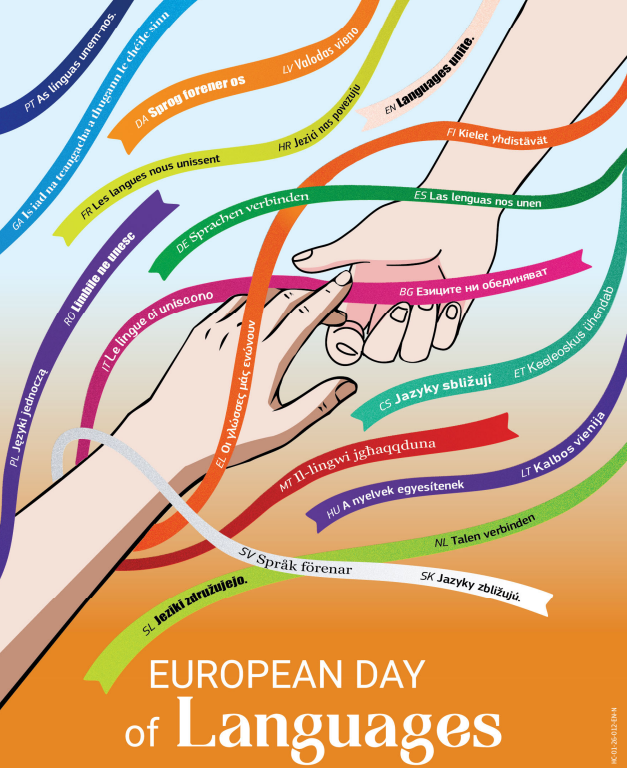
Language Exchange Corner – Language Practice in the Library

The University Library and Archives warmly welcomes the international students of Széchenyi István University, who enrich our city with their cultures and languages.
We believe that linguistic and cultural diversity is a value worth supporting and making visible.

How can I find a conversation partner?

If you would like to find a language practice partner, please fill out the online form at the following link:

👉 https://lib.sze.hu/hu/language-exchange

After submitting the form:

  • the library staff will contact you as soon as we find a suitable partner for you based on our database;

  • using the contact details you provided, you and your partner can also get in touch with each other directly and arrange the time and place of your meeting.

The information you provide on the form (e.g., languages spoken, contact details) will be used solely for the purpose of language exchange.

Where can you meet?

📍 Central Library, 2nd floor – Language Exchange Corner

The designated area provides an ideal environment for meeting and practicing languages.
Of course, you are welcome to agree on another meeting location, whether in another library of our network, elsewhere on campus, or anywhere in the city.

Share your experience with us!

We are delighted if the Language Exchange Corner helps you:

  • make new friends,

  • gain shared experiences,

  • and develop your language skills.

If you would like to share your feedback or experiences, please write to us:

✉️ kobori.sarolta@sze.hu

👉 We wish you enjoyable conversations and great success in your language learning!


Széchenyi István University Joins the “Pass It Back, Brother!” Campaign Again

Széchenyi István University Joins the “Pass It Back, Brother!” Campaign Again

The Pass It Back, Brother! campaign is a joint initiative by the Jane Goodall Institute Hungary, KÖVET Association for Sustainable Economies, Africa Foundation, Védegylet Association, and supported by Magyar Telekom. The campaign aims to collect unused or outdated mobile phones and accessories (small electronic devices) from Hungarian households in order to recycle the valuable minerals they contain.

Coltan, a mineral essential for mobile phone production, is mined in Africa—primarily in the Democratic Republic of the Congo—often in habitats of endangered species such as mountain gorillas, Grauer's gorillas, bonobos, and chimpanzees. This mining devastates forests, destroying the natural homes of these species and contributing to their decline. Roads built for extraction further fragment and damage the remaining forest areas. The campaign seeks to halt this process by encouraging mobile phone recycling.

Help protect gorillas and chimpanzees!

We encourage everyone to look around at home, find any unused or outdated phones, and drop them in the collection boxes located at designated drop-off points.

You can find Pass It Back, Brother! collection boxes at the following locations:

  • Széchenyi István University Library and Archives – Central Library (9026 Győr, Egyetem tér 1., Inno-Share Building)
  • SZE Apáczai Csere János Faculty of Humanities, Education and Social Sciences (9022 Győr, Liszt Ferenc u. 42.)
  • Mobilis Interactive Science Center (9026 Győr, Vásárhelyi Pál u. 66.)
Writefull

Writefull

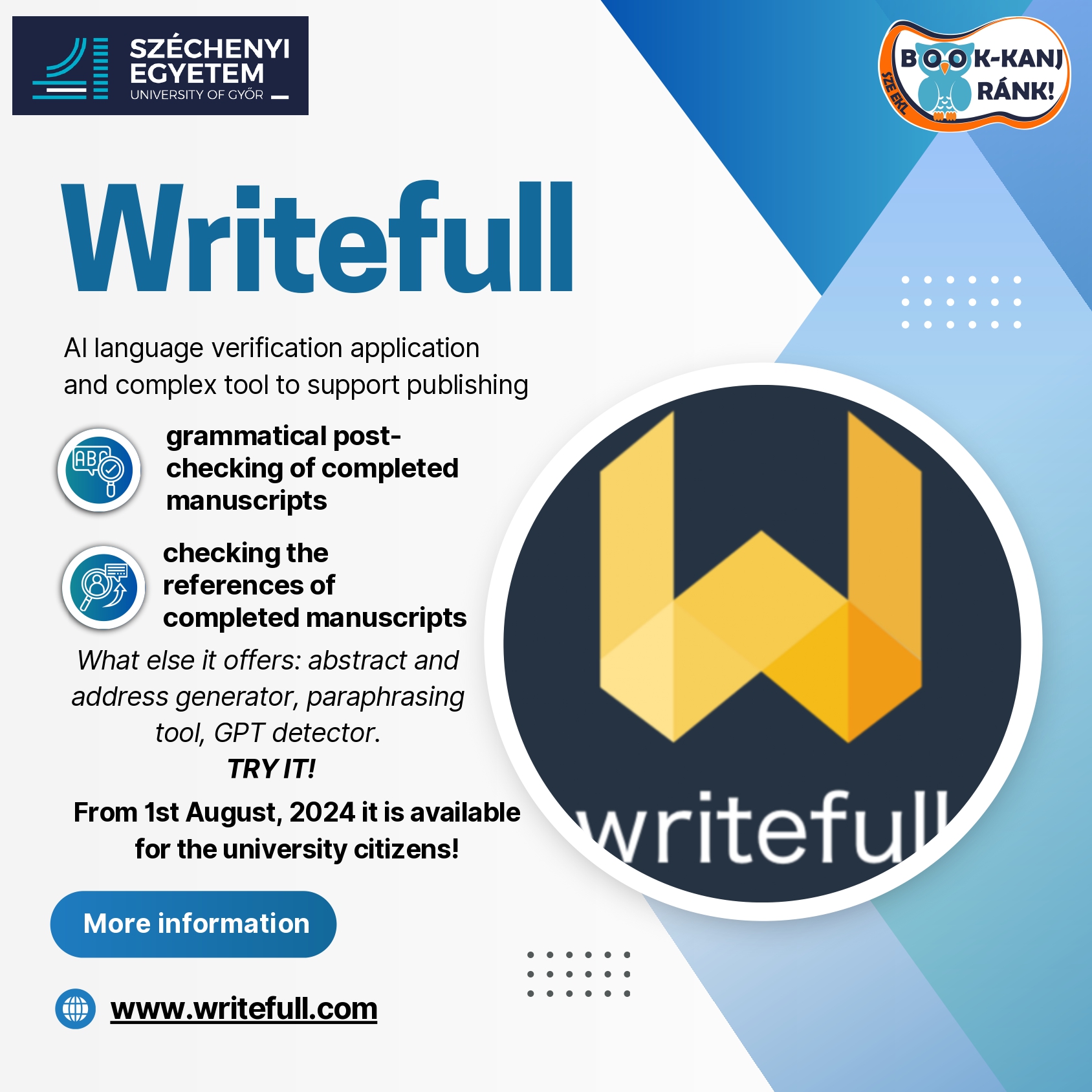
The AI language verification application and complex tool to support publishing has arrived at our university!

How to use it: register on writefull.com with the email address of sze.hu or ga.sze.hu!

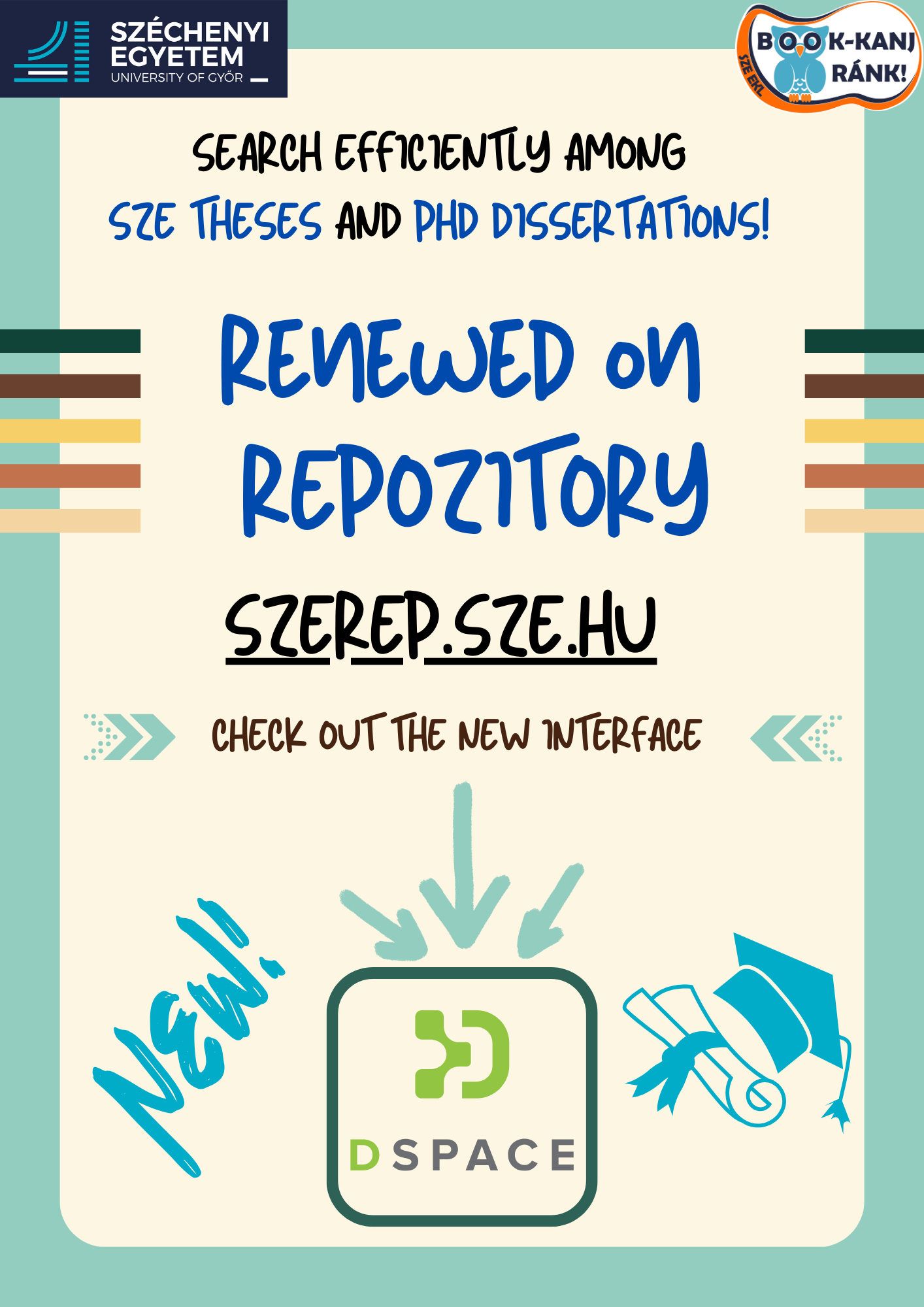
Renewed on repository!

Renewed on repository!

Click on the picture to see PDF form!

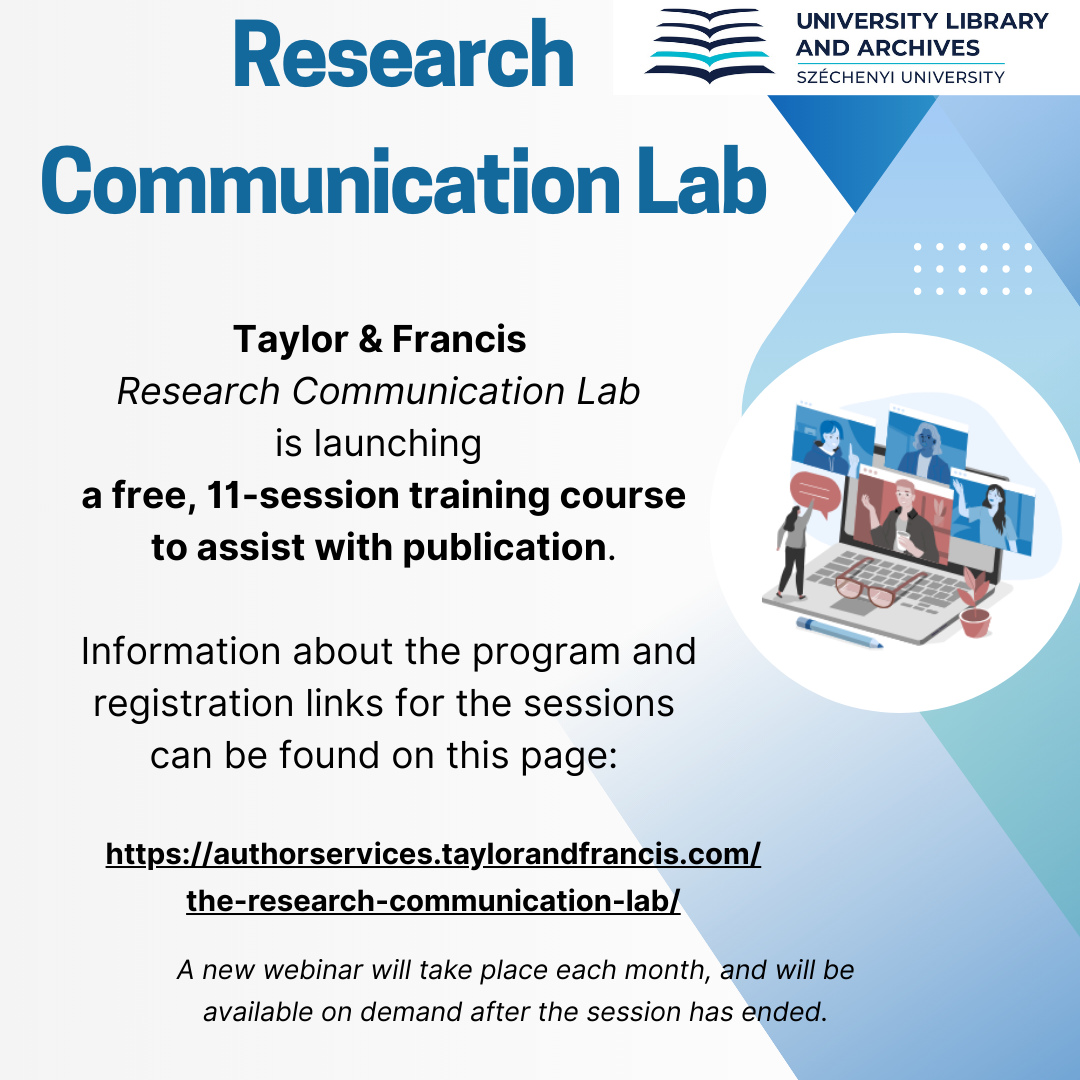
Trainings by the Elsevier Online Training Hub in English

shutterstock_1545205661.jpg

Trainings by the Elsevier Online Training Hub in English

Elsevier Webinars for Central & Eastern Europe


Date/Time (CET)

Title

28/02/2023; 10:00

Scientific information on ScienceDirect - go beyond the PDF


Learn more on how to use the best features to save your time and increase efficient discovery.

14/03/2023; 10:00

Importance of research data management


We'll talk about research data management and how it could help at different levels, from researchers to decision makers.


28/03/2023; 10:00

Predatory journals and how to avoid them


Find out how you can use the Scopus database to search for prestigious journals.


18/04/2023; 10:00

How Reaxys is supporting SDGs

Reaxys is Elsevier's database covering chemistry and related sciences. It is supporting researchers and academic teachers. It is also supporting multiple targeted research areas covered by SDG's. Join the webinar to learn more. 

25/04/2023; 10:00

Literature review with Scopus and SciVal

Empower your research with literature review in Scopus and SciVal.


09/05/2023; 10:00

Effective literature search on Scopus and ScienceDirect - combining two high-quality sources for best results

Learn tips and tricks on doing literature search and discover how to apply these skills efficiently in Scopus and ScienceDirect.


16/05/2023; 10:00

How to identify relevant topics and journals with Scopus and SciVal?

Tips on how to find relevant topics and journals with Scopus and SciVal, plus a quick topics overview.


30/05/2023; 10:00

Elsevier Author workshop

Session to support authors in how to publish scientific papers/books. You will have the opportunity to be (virtually) face to face with the experts from the Elsevier publishing team. A unique opportunity!


13/06/2023; 10:00

How to assess your input into SDG?

During the webinar, participants will learn how SDGs are presented in Elsevier’s analytical solutions and how this information could be used for further input assessment.